Factoring, the New Way: More Opportunities for Businesses and Fewer Risks for Financial Institutions
For many companies, access to working capital remains one of the key business challenges. Traditionally, businesses have relied on bank lending; however, factoring is increasingly becoming an effective alternative, enabling companies to access financing more quickly without taking on conventional loans.
An important step in the development of the factoring market has been the introduction of the Electronic Register of Assignments of Monetary Claims. The register is intended to address a long-standing issue that has hindered the development of factoring transactions — the risk of the same receivable being assigned multiple times to different financial institutions.
As noted by Viktoriia Havrylkina, Attorney at ETERNIX Law Firm, the principle of priority should now apply: the party that is first to register the assignment of a monetary claim in the register acquires the legal right to receive payment from the debtor.
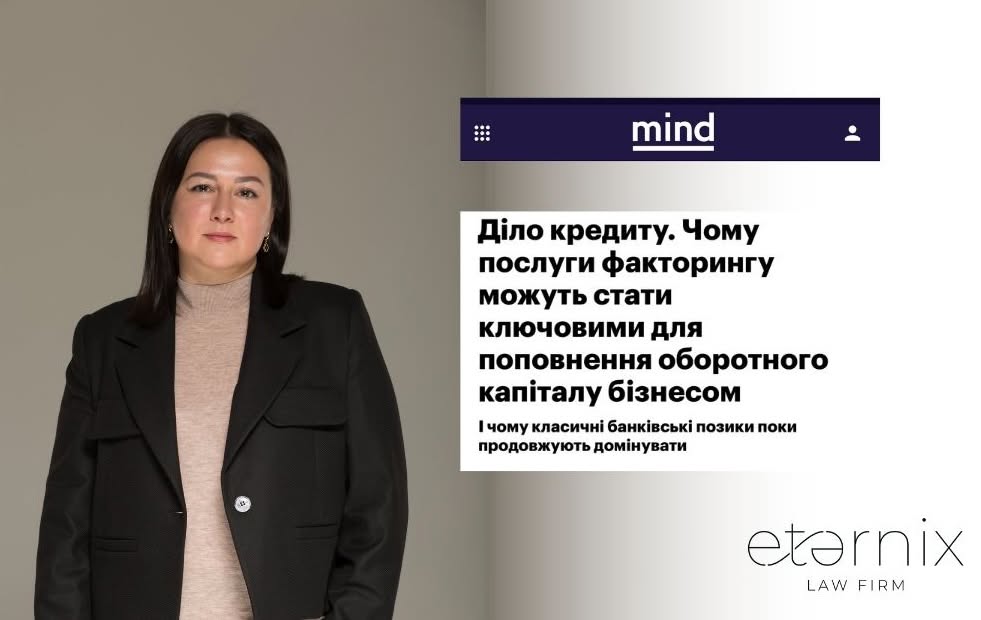
This mechanism is expected to increase market transparency, strengthen legal certainty, and reduce the number of disputes between participants in financial transactions.
At the same time, it is important to understand that the registry itself is not a universal safeguard against fraud. If the original contract was fictitious or the documents were forged, an entry in the registry will not confirm the validity of the business transaction. The registry is primarily intended to protect against the duplication of claims and to ensure legal certainty.
Another advantage of this innovation is the digitization of processes. Registration and verification procedures are moving online, which reduces bureaucracy, speeds up decision-making, and makes factoring transactions more accessible to businesses.
Factoring is unlikely to replace bank lending anytime soon, but it is already becoming an important tool for companies that need a quick injection of working capital and flexible financial solutions.
Other Articles
View all articlesUndergo a Military Medical Examination in One Day and Not Be Allowed to Leave the Territorial Recruitment Center: When Is a Repeat Medical Examination Lawful?

New Temporary Protection Rules for Ukrainian Men in the EU
The apartment exists, but it isn't listed in the state registry: What should property owners do?